Nigerian Deities
Explore the rich tapestry of Nigerian mythology and its deities.
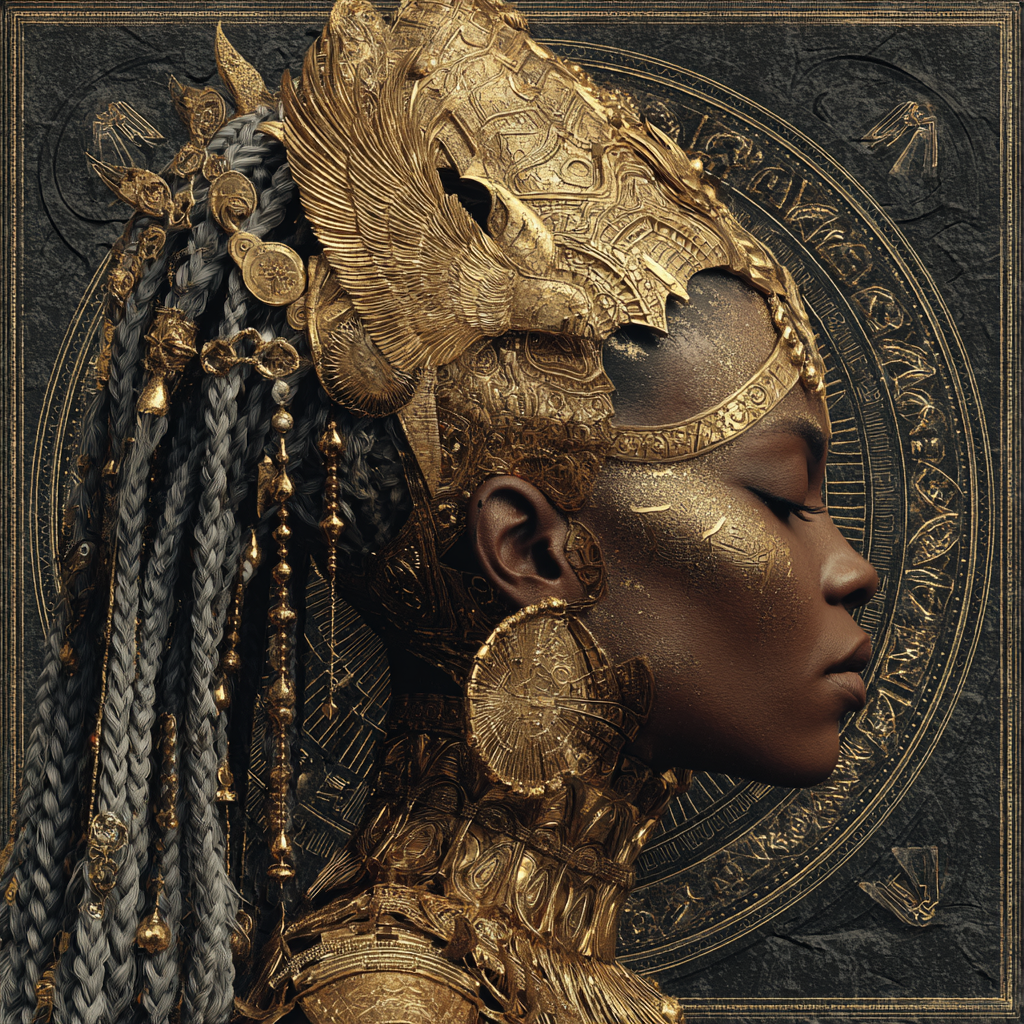
Shadow Sky
Delve into the Shadow Sky, where ancient deities reside and stories unfold, revealing the essence of Nigerian mythology and its cultural significance.
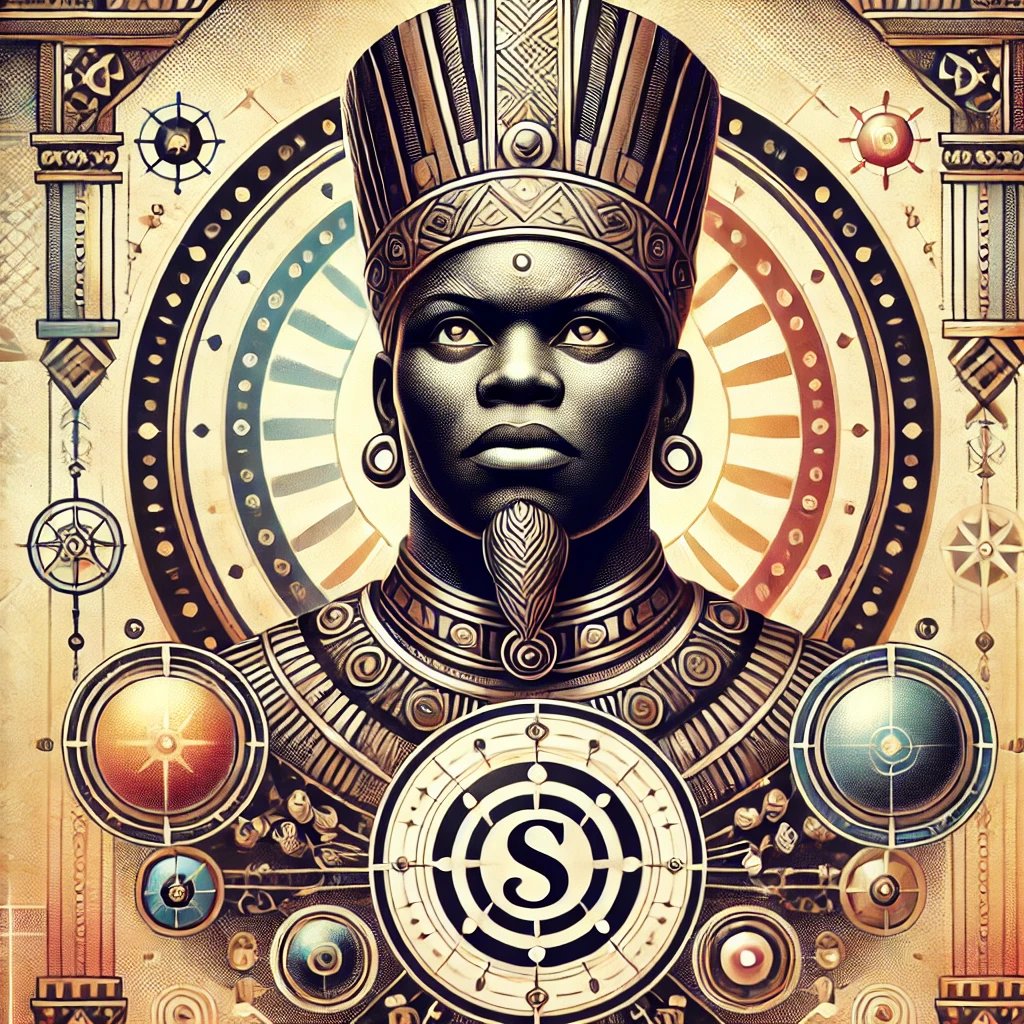
Shadow Realms
Discover the Shadow Realms, a mystical domain inhabited by powerful deities, each representing unique aspects of Nigerian culture and mythology, enriching our understanding of the African heritage.
Deities




Explore the divine beings of Nigerian mythology and their stories.
Contact Us
Reach out to us for inquiries about Nigerian mythology and our series on deities and realms.
Nigerian Deities
The gods of Nigeria's mythological traditions and what they actually represent.
Deities as Governing Principles
Nigerian deities are not supernatural beings in the Western religious sense. They are the personalised form of natural, social, and ethical principles that African civilisations used to organise governance, medicine, agriculture, law, and philosophy. To understand a deity is to understand a principle. To understand the pantheon is to understand the structure of the knowledge system.
This distinction matters because it changes everything about how Nigerian mythology should be read. The Orishas of Yoruba tradition, the Alusi of the Igbo, the Bori spirits of the Hausa, the Edion and Osas of the Edo: none of these are primitive explanations for confusing natural events. They are sophisticated frameworks for managing complex social and ecological realities, encoded in divine form because divine form is the most durable container for knowledge ever invented.
For the analytical framework explaining how African deities functioned as civilisational knowledge, see African Deities of Renown and Power at Afrodeities and the broader context at African Creator Gods.
The Yoruba Orishas
The Yoruba pantheon is structured beneath Olodumare, the supreme creative force from which all existence proceeds. Olodumare does not interact directly with the human world. The Orishas serve as the active principles through which divine order operates in daily life. Each Orisha governs a specific domain and encodes a specific body of knowledge.
Obatala
Obatala is the sculptor of human form, the deity associated with purity, patience, and the careful construction of the body. He is also the deity of those who are different: the disabled, the elderly, the albino. Obatala's domain is not simply creation but the ethics of how created beings are treated. His rituals encode principles of care, respect for difference, and the obligation of the community towards its most vulnerable members.
Shango
Shango, the Orisha of thunder and lightning, is one of the most widely recognised deities in the Yoruba tradition and one of the most misread. Shango is not simply a weather god. He is the principle of justice enforced through power, the understanding that authority without accountability produces destruction. His symbol, the double-headed axe, represents the dual capacity of power to build or destroy depending on the moral framework governing its use.
Shango's worship survived the Atlantic crossing and appears in Santeria in Cuba, Candomble in Brazil, and Shango Baptist traditions in Trinidad. The same deity, carrying the same knowledge, on three continents simultaneously. Read the full account at The Shadow Sky: Reclaiming Nigerian Mythology.
Ogun
Ogun governs iron, labour, the clearing of paths, and the ethics of work. He is worshipped by blacksmiths, soldiers, drivers, surgeons, and anyone whose work involves cutting or shaping the physical world. Ogun's domain encodes the relationship between technology, violence, and social responsibility: iron can build a city or destroy one, and the difference lies entirely in the governing ethics of the person wielding it.
Oshun
Oshun governs rivers, sweetwater, fertility, love, and the knowledge held by women. She is the principle of abundance and the preservation of life. Her domain includes reproductive health, diplomacy, and the management of relationships within communities. Oshun's knowledge survived the Middle Passage and is central to Candomble, Santeria, and Vodou traditions across the diaspora.
Oya
Oya governs wind, storms, change, and the marketplace. She is associated with the boundary between the living and the dead and is considered the most powerful of the female Orishas. Her domain encodes the understanding that change, though disruptive, is the mechanism through which renewal becomes possible. She clears what is no longer viable to make space for what must come next.
Orunmila and Ifa Divination
Orunmila is the Orisha of wisdom and the divine witness to human destiny. His primary vehicle is Ifa divination, a binary mathematical system encoding 256 Odu configurations that address questions of health, governance, agriculture, law, love, and moral conduct. A trained Babalawo spends years memorising the Odu corpus, each configuration containing multiple verses, proverbs, stories, and prescriptions.
Ifa is structurally equivalent to Leibniz's binary mathematics, the foundation of all digital computing. It predates Leibniz by centuries. This is not coincidence or similarity. It is evidence that African intellectual traditions developed sophisticated mathematical systems and applied them to problems of governance and knowledge management long before Europe produced equivalent frameworks.
The Igbo Alusi
Igbo spirituality organises itself differently from the Yoruba pantheon. Rather than a structured hierarchy of named deities, the Igbo tradition recognises a distributed network of Alusi, divine forces associated with specific places, natural phenomena, and social functions. Above all stands Chukwu, the supreme creative force, understood as too vast and too fundamental for direct propitiation.
Ala
Ala is the earth goddess and the most important deity in Igbo tradition. She governs fertility, morality, law, and the dead, who rest within her. Violations of Ala's laws are not simply crimes against the community. They are offences against the earth itself, requiring ritual restoration of the relationship between the people and the land. Ala's domain encodes an ecological ethics: the community's moral health and the land's productive health are the same thing.
Amadioha
Amadioha is the Igbo deity of thunder, associated with justice, purity, and communal harmony. Like Shango in the Yoruba tradition, Amadioha encodes the principle that authority must be accountable: the thunder strikes what is out of alignment with natural and social law.
Chi
Chi is the personal deity assigned to each individual at birth: a guardian, a spiritual double, a source of personal destiny. The relationship between a person and their Chi is understood as an active partnership. Chi does not simply bestow fortune or misfortune. It responds to the choices, efforts, and moral orientation of the individual it accompanies. The concept encodes a sophisticated understanding of the relationship between personal agency and destiny.
The Hausa Bori Spirits
The Hausa tradition of northern Nigeria includes the Bori spirit possession cult, a pre-Islamic religious system in which spirits called Iskoki inhabit practitioners and make their knowledge accessible to the community. The Bori spirits include figures associated with healing, governance, specific professions, and social conflicts. The tradition survived Islamisation by operating alongside rather than against the new religious framework, demonstrating the adaptive durability of Nigerian spiritual knowledge.
The Edo Tradition
The Kingdom of Benin, centred in present-day Edo State, produced one of the most sophisticated artistic and political traditions in West African history. Its bronze casting tradition, producing the Benin Bronzes, encoded the genealogy, history, and cosmological order of the kingdom in visual form. Osanobua is the supreme creator in the Edo tradition, with Ogun, Olokun (the sea), and the royal ancestors serving as the primary divine figures governing Edo spiritual and political life.
The Benin Bronzes are currently held largely in European museums, taken during the British Punitive Expedition of 1897. They are archives, not art objects. Their return is a matter of civilisational record, not heritage sentiment.
The Books: The Shadow Sky and The Shadow Realms
The Nigerian Mythology Series by Chinenye Egbuna Ikwuemesi at Afrodeities Press brings these traditions into literary form, treating the Yoruba and Igbo cosmologies as the sophisticated theological architecture they are.
Nigerian Mythology: The Shadow Sky maps the cosmology beneath Yoruba and Igbo tradition, the shadow world that mirrors and interpenetrates the visible one.
Nigerian Mythology: The Shadow Realms goes deeper into the cosmological architecture of these traditions.
For the full context of Nigerian mythology within the broader African mythological tradition, see Mythology and Civilisations at African Mythology.