
Yoruba Mythology
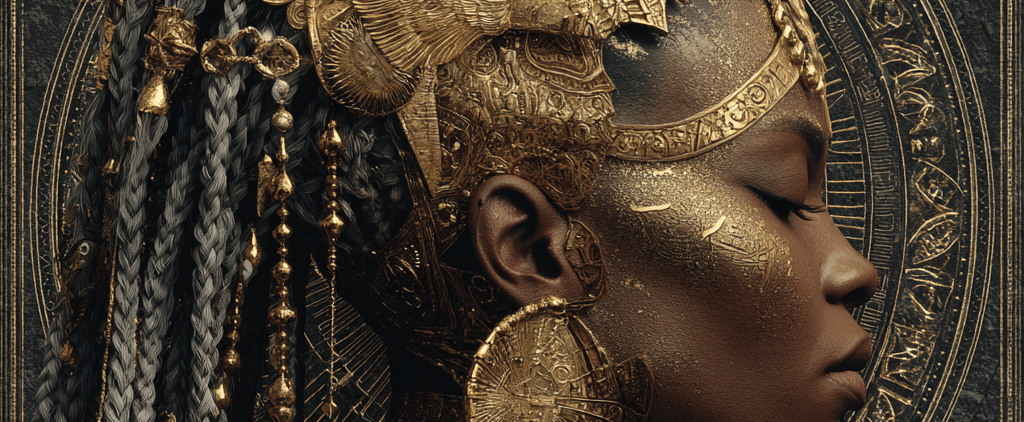
Yoruba Mythology: The Architecture of Divine Order
Yoruba mythology represents one of Africa's most sophisticated cosmological systems,not folklore, but a complete philosophical framework for understanding existence, morality, and the relationship between the material and spiritual realms. Originating from what is now southwestern Nigeria and the Republic of Benin, this knowledge system has demonstrated remarkable resilience, surviving the Middle Passage to fundamentally shape spiritual practices across the African diaspora.
The Cosmological Framework
At the foundation of Yoruba thought stands Olodumare (also Olorun), the Supreme Creator,a force beyond human comprehension, neither male nor female, who set creation in motion but does not require propitiation. Below Olodumare exists a structured pantheon of Orisha (also spelled Orisa), divine forces that govern specific aspects of existence and serve as intermediaries between humanity and the Supreme.
The Yoruba cosmos operates on principles of àṣẹ (vital force or divine power) and ìwà (character). Àṣẹ flows through all things,gods, humans, animals, plants, and objects,creating a living, interconnected universe. Success, both spiritual and material, depends on accumulating and properly channeling àṣẹ through right action, sacrifice, and alignment with one's destiny.
Central to individual existence is ori (inner head or consciousness), which represents personal destiny chosen before birth. Each person's ori must be honored and consulted, for it knows the path laid out in the spiritual realm before incarnation. This concept rejects fatalism,while destiny is chosen, how one navigates it remains subject to character and wisdom.
The Divine Hierarchy
Obatala, the sculptor deity, shapes human forms from clay. Associated with purity, justice, and clarity of thought, Obatala's mythology includes the humbling tale of his intoxication during creation,accounting for human physical differences and disabilities, which Yoruba philosophy treats not as curses but as sacred variations deserving reverence.
Orunmila (also called Ifa), the deity of wisdom and divination, witnessed creation and thus knows all destinies. Through the Ifa divination system,a sophisticated binary oracle using palm nuts or divination chains,priests (babaláwo) access Orunmila's knowledge through 256 odu (sacred verses), each containing multiple ese (poems) that encode historical, philosophical, and practical wisdom.
Shango, perhaps the most celebrated Orisha, embodies kingship, thunder, drumming, and masculine power. Historical and divine simultaneously, Shango was the fourth Alaafin of Oyo before his deification. His mythology speaks to accountability,even divine kings face consequences for abuse of power.
Oshun represents love, beauty, fertility, and rivers, but her stories consistently emphasize that femininity contains both nurturing sweetness and devastating power. When Oshun was excluded from early creation councils, nothing prospered until the other Orisha acknowledged her indispensability,a corrective to narratives that diminish women's authority in African systems.
Ogun, deity of iron, war, technology, and labor, cleared the primordial path from heaven to earth with his machete. In a civilization that mastered ironworking, Ogun's elevation reflects the Yoruba understanding that technological advancement is divine work requiring both creativity and terrible responsibility.
Eshu (Elegba), often misunderstood through Christian colonial filters as "devil," actually serves as divine messenger, trickster, and enforcer of cosmic justice. Eshu ensures that àṣẹ flows properly, tests human character, and punishes those who neglect sacrifice or propriety. His apparent chaos actually maintains universal order.


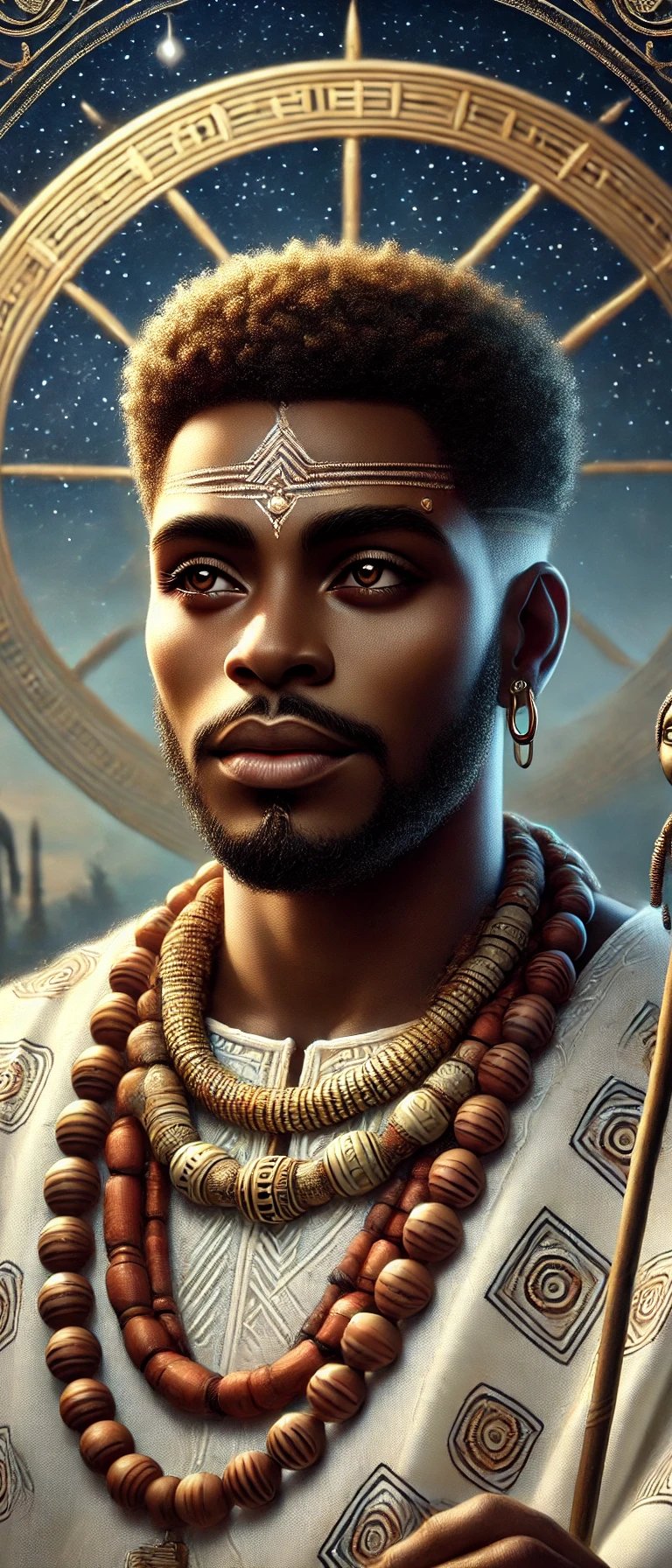
The Living System: Ifa and Egungun
Yoruba mythology isn't static text but an active technology. The Ifa divination system functions as a comprehensive database of human situations and appropriate responses, preserved through oral literature spanning thousands of verses. Properly trained babaláwo spend decades mastering this knowledge, which encompasses medicine, psychology, history, and ethics within its mythological framework.
Egungun (ancestral masquerades) physically manifest the connection between living and dead. These aren't mere performances but actual visitations, where ancestors return to bless, counsel, or discipline their descendants. The elaborate costumes and rituals surrounding Egungun demonstrate Yoruba understanding that community transcends the grave.
Syncretism and Diasporic Evolution
When enslaved Yoruba-speaking peoples were forcibly transported to the Americas, they encoded their deities within Catholic saints to preserve their traditions. This strategic syncretism produced living religions:
Santería/Lucumí (Cuba) maintains Yoruba liturgical language, with Shango syncretized as Santa Barbara, Oshun as Our Lady of Charity, and Obatala as Our Lady of Mercy. Cuban Santería remains one of the most conservative preservations of Yoruba practice outside Africa.
Candomblé (Brazil) developed regional variations (Ketu, Jeje, Angola nations) while maintaining complex initiation hierarchies and feast cycles honoring the Orixá.
Trinidad Orisha (Trinidad and Tobago) blends Yoruba deities with Baptist Christianity, creating unique "Spiritual Baptist" traditions.
21 Divisiones (Dominican Republic) merges Yoruba Orisha with Kongolese and Taino influences under the umbrella term "misterios."
These aren't degraded remnants but sophisticated adaptations that demonstrate the knowledge system's inherent flexibility and power. The fact that Yoruba cosmology survived, adapted, and thrives across continents testifies to its philosophical rigor and practical utility.
Yoruba mythology remains a living architecture,continuously interpreted, practiced, and transmitted as proof that African knowledge systems were designed for survival across any terrain.
Yoruba Mythology in the Broader African Context
The Yoruba tradition is one of the most thoroughly documented African knowledge systems, partly because of its survival in the diaspora and the scholarship that followed. But it sits within a continental tradition of mythological knowledge systems that share fundamental principles: the encoding of governance, science, and ethics in religious form; the organisation of knowledge through specialist practitioners; the durability of oral and ritual transmission across catastrophic disruption.
For the comparative framework across African traditions, see African Creator Gods, which covers creator deity traditions across West, Nile, Central, and Southern Africa.
For the corrective positioning of Yoruba cosmology within African civilisational history, see African Cosmology Systems and African Deities of Renown and Power at Afrodeities.
The Nigerian Mythology Series brings the Yoruba cosmological framework into literary form: Nigerian Mythology: The Shadow Sky.